
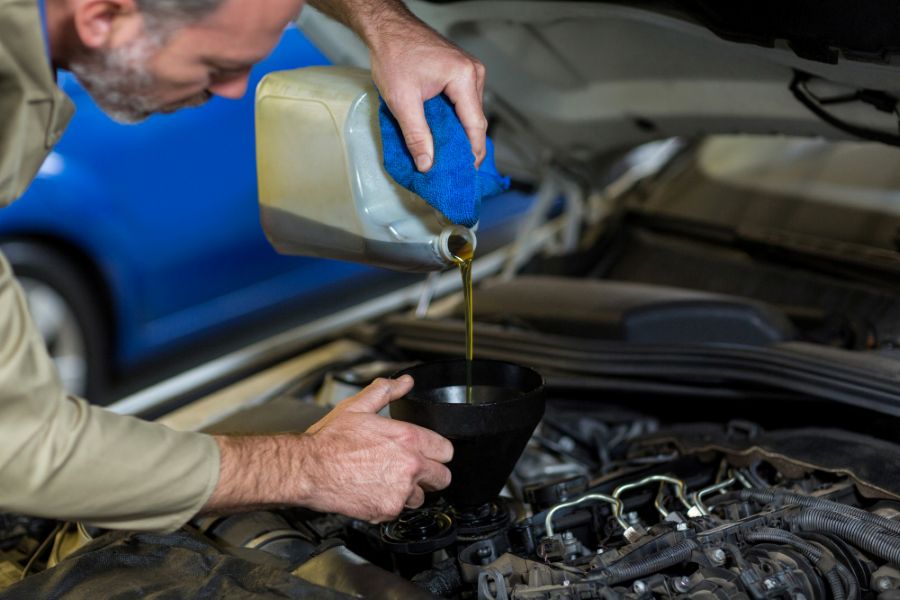
Using the wrong engine oil can cause symptoms such as unusual engine noise, sluggish performance, increased oil consumption, warning lights, poor fuel economy or harder cold starts. The right choice depends on your vehicle manufacturer’s specification, viscosity grade, engine type, driving conditions and required oil standard.
Key takeaways
- Wrong engine oil symptoms can be subtle at first, including noisier operation, slower starts, oil burning or reduced fuel efficiency.
- Viscosity is only one part of oil selection. The oil must also meet the correct manufacturer, API, ACEA or other required service specification.
- A higher-priced oil is not automatically better if it does not match the engine’s requirements.
- Topping up with the wrong oil once may not always cause immediate damage, but repeated use can increase wear, deposits or performance issues.
- Workshops and fleets should use a documented oil selection process to avoid warranty, compliance and maintenance problems.
5 Common symptoms of using the wrong engine oil
Wrong engine oil symptoms often overlap with other mechanical problems, so they should not be treated as proof on their own. However, the following signs can suggest the oil grade, quality or specification needs checking.
1. The engine sounds louder than usual
If oil is too thin, too old or not suitable for the engine, moving parts may not be cushioned as effectively. Drivers may notice ticking, tapping or rattling sounds, particularly on start-up or under load.
Some engine noise can also come from low oil level, timing chain wear, lifter issues or other faults. If the noise appears soon after an oil change, the oil grade and specification should be checked first.
2. The oil warning light comes on
An oil pressure or oil level warning should not be ignored. The wrong viscosity may affect oil pressure, but the warning could also indicate low oil level, pump problems, leaks or serious engine wear.
If an oil warning light appears while driving, it is usually safest to stop as soon as practical and check the owner’s handbook. Continuing to drive with inadequate lubrication can lead to expensive engine damage.
3. The vehicle feels sluggish or less efficient
Oil that is too thick may create more resistance inside the engine, especially during cold starts. Oil that is too thin may not provide the intended film strength in some operating conditions. Either issue can contribute to roughness, reduced responsiveness or poor fuel economy.
These symptoms can also be caused by tyres, fuel quality, sensors, filters or ignition faults, so oil should be considered as part of a broader diagnosis.
4. You notice smoke, burning smells or higher oil use
Using oil that does not suit the engine can contribute to oil consumption in some vehicles. Blue smoke from the exhaust, a burning smell or frequent top-ups may indicate oil is entering the combustion chamber, leaking externally or not performing as expected.
Do not assume thicker oil is the best fix. It may mask symptoms temporarily while creating other problems, especially in modern engines with tight tolerances or emissions systems.
5. Cold starts become harder or rougher
The first number in a multigrade oil, such as the “5W” in 5W-30, relates to low-temperature performance. If the oil does not flow well enough during start-up, the engine may feel rough, slow to crank or noisier until it warms.
In Australia, climate varies widely between regions. A vehicle operating in a cooler inland area may have different start-up demands from one used mainly in warmer coastal or metropolitan conditions. The owner’s handbook remains the starting point.
What “wrong engine oil” actually means
Using the wrong engine oil does not only mean pouring diesel oil into a petrol engine or choosing the cheapest bottle on the shelf. In many cases, the oil may look suitable but still be wrong for the vehicle.
Engine oil is selected by several factors, including:
- Viscosity grade, such as 5W-30 or 10W-40
- Petrol or diesel engine suitability
- Manufacturer approvals
- API, ACEA or other performance standards
- Synthetic, semi-synthetic or mineral formulation
- Emissions system compatibility
- Operating temperature, load and service interval
The American Petroleum Institute advises vehicle owners to follow the manufacturer’s recommendations for SAE oil viscosity, while RACQ recommends checking the owner’s handbook for both viscosity and the required minimum service rating. These points matter because oil must flow correctly at start-up, maintain protection at operating temperature and support the engine design.
For businesses, working with an experienced engine oil supplier can make oil selection more consistent across different vehicles and applications.
Situation, likely issue and what to do
| Situation | What it may suggest | What to do |
| Noise starts soon after an oil change | Incorrect viscosity, low oil level or unsuitable specification | Check the invoice, oil label and handbook |
| Oil warning light appears | Low oil level, pressure issue or mechanical fault | Stop safely and seek qualified advice |
| Oil consumption increases after switching oils | Oil may not suit the engine or existing wear may be exposed | Confirm specification and inspect for leaks or smoke |
| Workshop stocks one oil for many vehicles | Risk of unsuitable oil being used across mixed engines | Build a vehicle-specific lubricant selection process |
| Fuel use worsens after servicing | Oil may be too thick, but other causes are possible | Review oil grade and diagnose related factors |
Information to check before buying or changing oil
Before contacting LSA Oils, a mechanic or another lubricant adviser, gather:
- Vehicle make, model, year and engine type
- Registration or VIN if available
- Current odometer reading
- Oil grade used at the last service
- Owner’s handbook oil specification
- Whether the vehicle is petrol, diesel, hybrid, turbocharged or modified
- Typical driving conditions, such as towing, stop-start traffic or long highway use
- Any symptoms, warning lights or recent repairs
- Order size or supply needs for workshops and fleets
If wrong engine oil symptoms are persistent, costly, unclear or starting to affect your confidence, time, safety, compliance or maintenance decisions, it may be worth getting tailored advice. You can contact the team or request product advice from LSA Oils to understand whether their petrol engine oils, lubricants and oil supply solutions are the right fit and what the next step would involve.
Frequently Asked Questions
Can the wrong engine oil damage a petrol engine?
It can, particularly if the oil is the wrong viscosity, lacks the required service rating or is used repeatedly over time. Damage risk depends on the engine design, driving conditions, oil level and how long the oil remains in use.
How quickly would I notice symptoms after using the wrong oil?
Some symptoms may appear soon after an oil change, such as noise, warning lights or rough starting. Other effects, such as deposits or wear, may develop gradually and be harder to link to one oil change.
Is thicker engine oil better for older cars?
Not always. Some older engines may tolerate or require different viscosity ranges, but thicker oil can reduce flow on start-up or affect modern systems. Always check the manufacturer’s guidance and ask a qualified professional if the engine is worn or modified.
Can I mix different motor oils when topping up?
Small top-ups may be unavoidable, but the safest approach is to use oil that matches the required grade and specification. Mixing motor oils with different standards or formulations can reduce confidence in performance, especially before long trips or heavy-duty use.
How do workshops avoid using the wrong oil?
Workshops can reduce risk by checking each vehicle’s specification, using reliable product data, labelling bulk oil clearly, training staff and working with a supplier that understands automotive lubricant requirements.
