
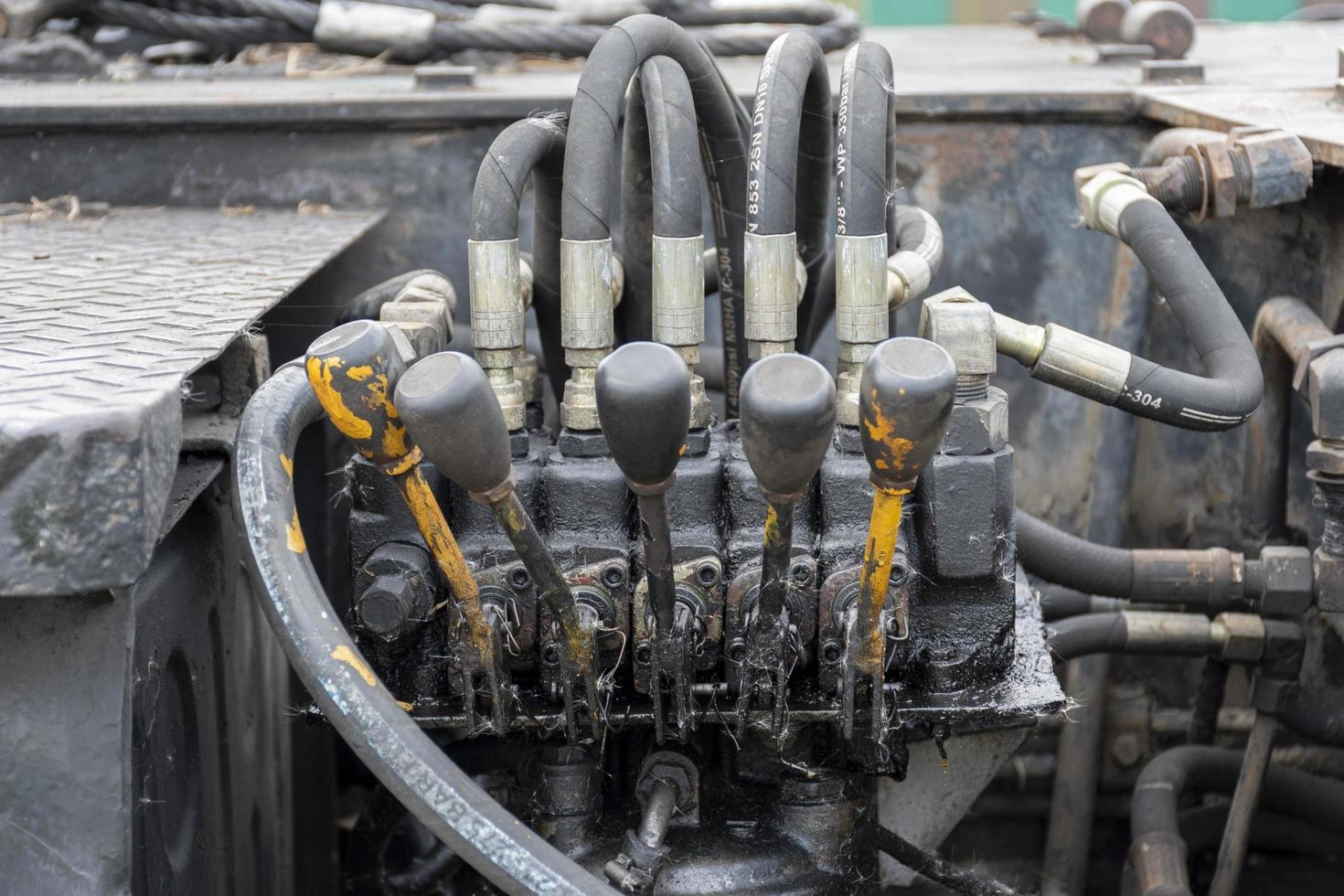
Hydraulic systems rarely fail without warning. You’ll notice slow cycles, unusual noises, or fluid that doesn’t look right. By the time something actually stops working, the damage has usually been building for a while.
In most cases, the cause is the oil. Research shows fluid-related problems sit behind 80 to 90 per cent of all hydraulic failures. That makes sense: oil lubricates, transfers power, dissipates heat, and protects every internal surface. Get it wrong and everything downstream suffers.
1. Contaminated Oil
Contamination is responsible for 70 to 90 per cent of hydraulic system wear. The damaging particles are mostly invisible. Anything in the 5 to 15 micron range is too small to see, but exactly the right size to score a valve bore or grind against a pump surface.
The main sources:
- Solid particles: wear debris, rust, and dirt introduced during maintenance
- Water: condensation, leaking seals, or drums stored with lids off
- Air: aeration or cavitation from low fluid levels or suction leaks
- Incompatible fluids: added during top-ups without checking what is already in the system
2. Wrong Viscosity Grade
Too thick and the oil starves the pump on cold starts, triggering cavitation. Too thin and it leaks past internal clearances and fails to maintain a lubricating film. Both situations wear out components faster than they should.
| Issue | Typical Cause | What Happens |
|---|---|---|
| Oil too thin | High ambient temp or wrong grade | Internal leakage, film breakdown, wear |
| Oil too thick | Cold start or wrong grade | Cavitation, sluggish response, power loss |
| Viscosity breakdown | Heat or shear forces | Loss of film strength, accelerated wear |
Temperature swings across Australian seasons make this a real issue. LSA’s Hydraulic HVI range (HVI 15 to HVI 100) is designed to maintain stable viscosity across the kind of temperature variation mobile and industrial plant face locally.
3. Overheating
Heat causes fast, compounding damage. Every 10 degrees above normal operating temperature roughly halves remaining fluid life. Seals harden, oxidation accelerates, and the lubricating film thins at the exact moment the system is under load.
Common causes include undersized reservoirs, blocked heat exchangers, running beyond load ratings, or oil with poor thermal stability. An oil with a high viscosity index and strong oxidative stability handles heat better and slows the degradation cycle.
4. Oil Oxidation
All hydraulic oil oxidises with time and heat. It is the dominant degradation reaction in service, and it is self-reinforcing. Oxidation products build up, catalyse further breakdown, and eventually produce varnish deposits, sludge, rising viscosity, and acids that attack metal surfaces.
Dark brown oil with a burnt smell, or a rising total acid number (TAN) on an oil analysis, are key warning signs. Servo valves tend to fail first because varnish quickly blocks their tight clearances.
Oils formulated with strong antioxidant packages, like LSA Hydraulic HVI 46 and LSA Hydraulic HVI 68, help extend service intervals and keep systems cleaner between drains.
5. Water Contamination
Free water in a hydraulic system is a serious issue. Even small amounts can lead to corrosion, hydrogen embrittlement, and vapour cavitation, while quickly degrading the oil’s protective properties.
Milky fluid is the clearest sign. Condensation in the reservoir is the most common entry point, especially in equipment that cycles between operating temperature and ambient conditions overnight. An oil with good demulsibility separates water out rather than carrying it through the circuit.
6. Using the Wrong Oil
Specification mismatches cause more damage than expected. Viscosity, additive chemistry, and temperature range all need to suit the equipment. Some OEMs specify zinc-free (ZF) formulations to protect certain seal materials or yellow metal components. Running a zinc-based oil in those systems can gradually degrade seals.
Mixing oils during a top-up is another common mistake. Two products at the same ISO grade can still interact poorly if their additive systems differ, reducing antifoam performance or forming sludge. Always flush before switching products.
Causes, Oil Factors, and Prevention
| Failure Cause | Oil Factor | Prevention |
|---|---|---|
| Particle contamination | Abrasive debris in fluid | Filtration + regular oil changes |
| Wrong viscosity | Grade mismatch or shear thinning | HVI oil matched to application and climate |
| Overheating | Poor thermal stability, low VI | Thermally stable HVI oil + cooler maintenance |
| Oxidation | Additive depletion, varnish | Oils with strong antioxidant packages |
| Water ingress | Emulsification, corrosion | Good demulsibility oil + sealed reservoir |
| Wrong oil type | Incompatibility, seal attack | Match OEM spec; never mix products |
Frequently Asked Questions
How often should I change hydraulic oil?
It depends on oil quality and operating conditions. Standard mineral oils typically need changing every 1,000 to 2,000 hours. Premium HVI oils can go longer, but the most reliable guide is an oil analysis test rather than the calendar.
What does contaminated hydraulic oil look like?
Milky or cloudy fluid points to water. Dark brown oil with a burnt smell suggests oxidation. A gritty texture or unusually frequent filter changes indicates solid contamination. Any of these signs mean it’s time to test or replace the oil.
Can I top up with a different brand?
It carries risk. Oils from different formulation families can react poorly, even at the same ISO grade. Flush the system first and confirm the replacement meets the OEM specification.
What viscosity grade suits most Australian hydraulic equipment?
ISO VG 46 and VG 68 cover most industrial and mobile applications. Equipment running through significant seasonal temperature swings benefits from an HVI grade, which maintains film strength across a wider range.
Do I need zinc-free hydraulic oil?
Only if your OEM specifies it. ZF oils protect certain seal materials and yellow metal components. If required, do not substitute. If not, a quality zinc-based oil at the correct grade is suitable.
Get the Right Oil from LSA Oils
As a hydraulic oil supplier, we stock hydraulic fluids across the full range of grades and formulations, from standard mineral oils to premium HVI and zinc-free options designed for Australian conditions. Whether you’re running industrial plant, mobile construction equipment, or automotive lift systems, we can help point you to the right product.
Browse our hydraulic oil range or get in touch to talk through your setup. Matching the right oil to your machine is one of the simplest ways to protect equipment and reduce unplanned downtime.
