
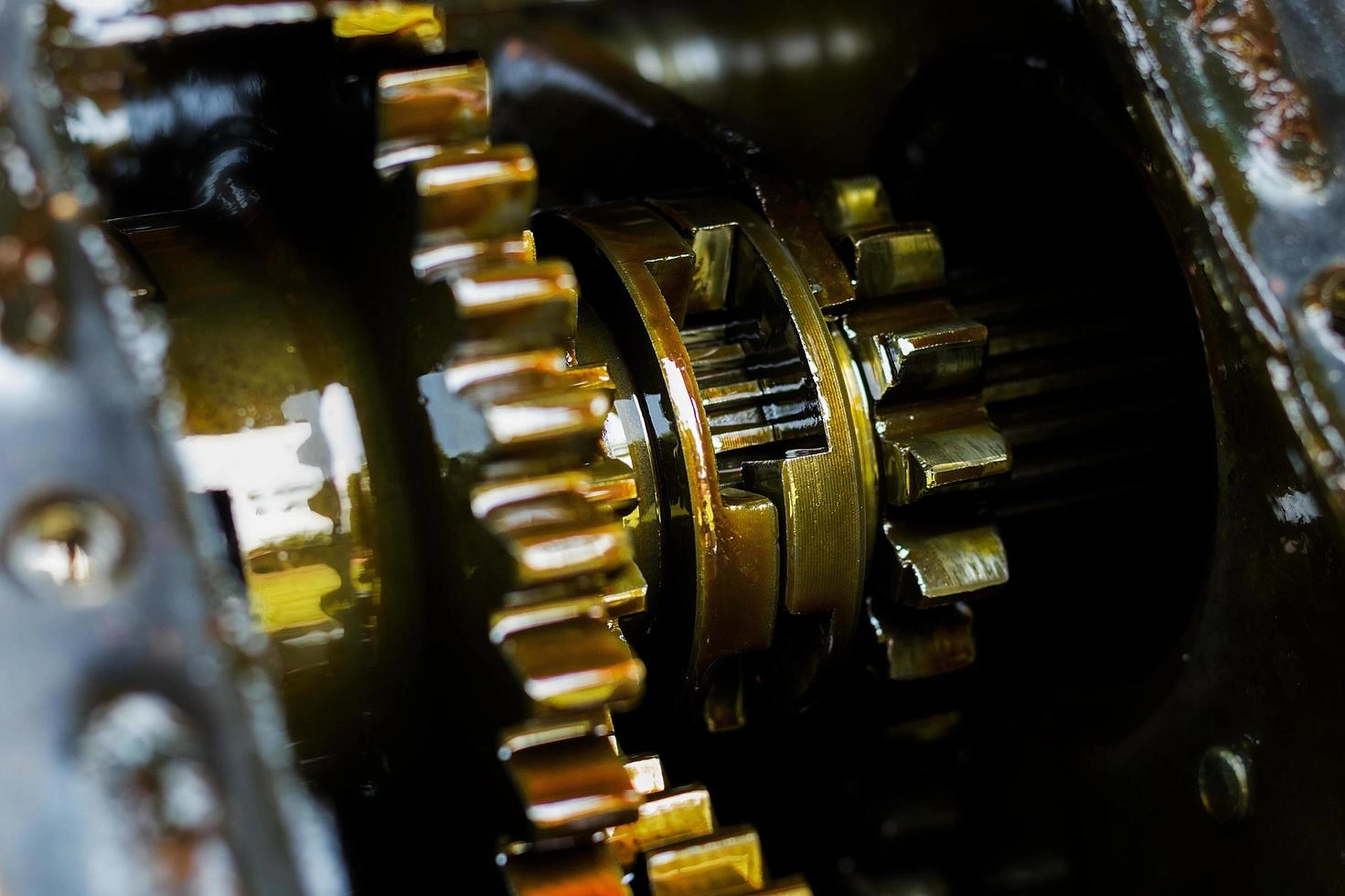
They’re both drivetrain oils, both sold at trade counters, and the labels don’t always make it obvious which is which. But gear oil and transmission oil serve fundamentally different roles, and using the wrong one is a costly mistake.
Gear Oil: Built for Brute Force
Gear oil goes into manual gearboxes, differentials, and transfer cases: high-load, high-heat environments with no pump circulating the fluid. The oil needs to be thick enough to cling to surfaces and cushion gear mesh impact. Skip the right film strength and you’ll see scoring, pitting, and corrosion quickly.
- Viscosity: SAE 75W-90, 80W-90, or 85W-140. Much heavier than engine oil.
- EP additives: sulphur-phosphorus chemistry that reacts at contact points to prevent metal-to-metal wear
- GL rating: GL-4 for most manual gearboxes; GL-5 for most differentials
For differentials and crown-wheel gears, LSA Gear Oil 80W90 handles the load across cars, 4WDs, and trucks. GL-4 manual gearboxes are better suited to Gear Oil 75W90, which also flows well on cold starts.
Transmission Oil: Precision Over Power
Inside an automatic, ATF isn’t just a lubricant. It’s a hydraulic medium that actuates gear changes, manages clutch friction, and cools components at the same time. Thin, clean, and chemically precise; the opposite of gear oil.
- Viscosity: far thinner than gear oil; needs to flow freely through narrow solenoids and valve bores
- Friction modifiers: tuned to the clutch pack specification of each transmission type
- Detergents and anti-foam: keep passages clear; foam reduces hydraulic pressure
LSA’s transmission fluid range covers conventional automatics, CVTs, DCTs, and heavy-duty units.
The Key Differences at a Glance
| Category | Gear Oil | Transmission Oil (ATF) |
|---|---|---|
| Where it goes | Manual gearboxes, differentials, transfer cases | Automatic transmissions, CVTs, DCTs |
| Viscosity | High (75W-90, 80W-90, 85W-140) | Low (0W-5 to 5W-10 range) |
| Key additives | EP (extreme pressure), anti-wear | Friction modifiers, detergents, anti-foam |
| API classification | GL-4 or GL-5 (MT-1 for heavy duty) | ATF spec: Dexron, Mercon, OEM-specific |
| How it circulates | Splash only, no pump | Pressurised hydraulic circuit |
| Can you swap them? | Never into an automatic | Some manuals take ATF; check OEM spec first |
What Happens When You Use the Wrong One
Gear oil in an automatic is a serious problem. It’s too viscous to pass through hydraulic passages, so solenoids clog, clutch packs starve, and the transmission overheats. The damage builds gradually, making it difficult to detect until failure occurs.
ATF in a manual or differential is more subtle but just as damaging. There’s not enough film strength or EP chemistry for high gear contact pressure, so teeth, synchronisers, and bearings wear prematurely. GL-5 can also damage brass synchroniser rings in gearboxes specified for GL-4, so it’s a mismatch, not an upgrade.
TDL and UTTO: When One Oil Does More
Not every application needs a strict industrial gear oil or ATF. Total driveline (TDL) oils meet both GL-4 and GL-5 requirements with synchroniser-safe chemistry, useful when one fill covers gearbox, transfer case, and axle. UTTO goes further in agricultural applications, combining transmission, hydraulic, and wet-brake lubrication in one fluid. LSA’s Tractor Transmission Universal is designed for this purpose. Still, always read the label. If it doesn’t list your application, it doesn’t cover it.
Quick Reference: Application to Oil Type
| Application | Oil Type |
|---|---|
| Manual gearbox (passenger car) | GL-4 gear oil (e.g. 75W-90) |
| Differential (car, 4WD, truck) | GL-5 gear oil (e.g. 80W-90, 85W-140) |
| Automatic transmission | ATF (check OEM spec for type) |
| CVT transmission | CVT fluid only |
| Tractor drivetrain/hydraulics | UTTO oil |
Frequently Asked Questions
Can I use gear oil in an automatic transmission?
Don’t. It’s too thick for hydraulic circuits and will block solenoids, starve clutch packs, and overheat the transmission. Use the ATF grade specified in your vehicle manual.
Can ATF go in a manual gearbox?
Some OEMs specify ATF for certain manuals, but they state this clearly. Most require proper gear oil for EP protection. Always check before filling.
What does the ‘W’ mean in grades like 75W-90?
Winter. The first number reflects cold-temperature viscosity; the second is at operating temperature. Lower first numbers improve cold-start performance.
Is GL-5 an upgrade over GL-4?
In a differential, yes. In a synchromesh gearbox designed for GL-4, no. The higher EP additive load can damage brass synchroniser rings. Always follow OEM requirements.
How often do these oils need changing?
Gear oil in a differential or manual gearbox typically lasts 50,000 to 80,000 km. ATF varies widely, from around 40,000 km for conventional fluids to over 100,000 km for full synthetics. Follow your service schedule.
Need Help Choosing? Talk to LSA Oils
We stock gear oils, limited-slip fluids, ATF, CVT fluid, and UTTO at LSA Oils, covering everything from daily drivers to heavy commercial vehicles and agricultural equipment.
Our Lube Guide provides quick recommendations by vehicle and application. Or browse the gear oil range and transmission fluids directly. Not sure? Reach out and we’ll help you sort it out.
